

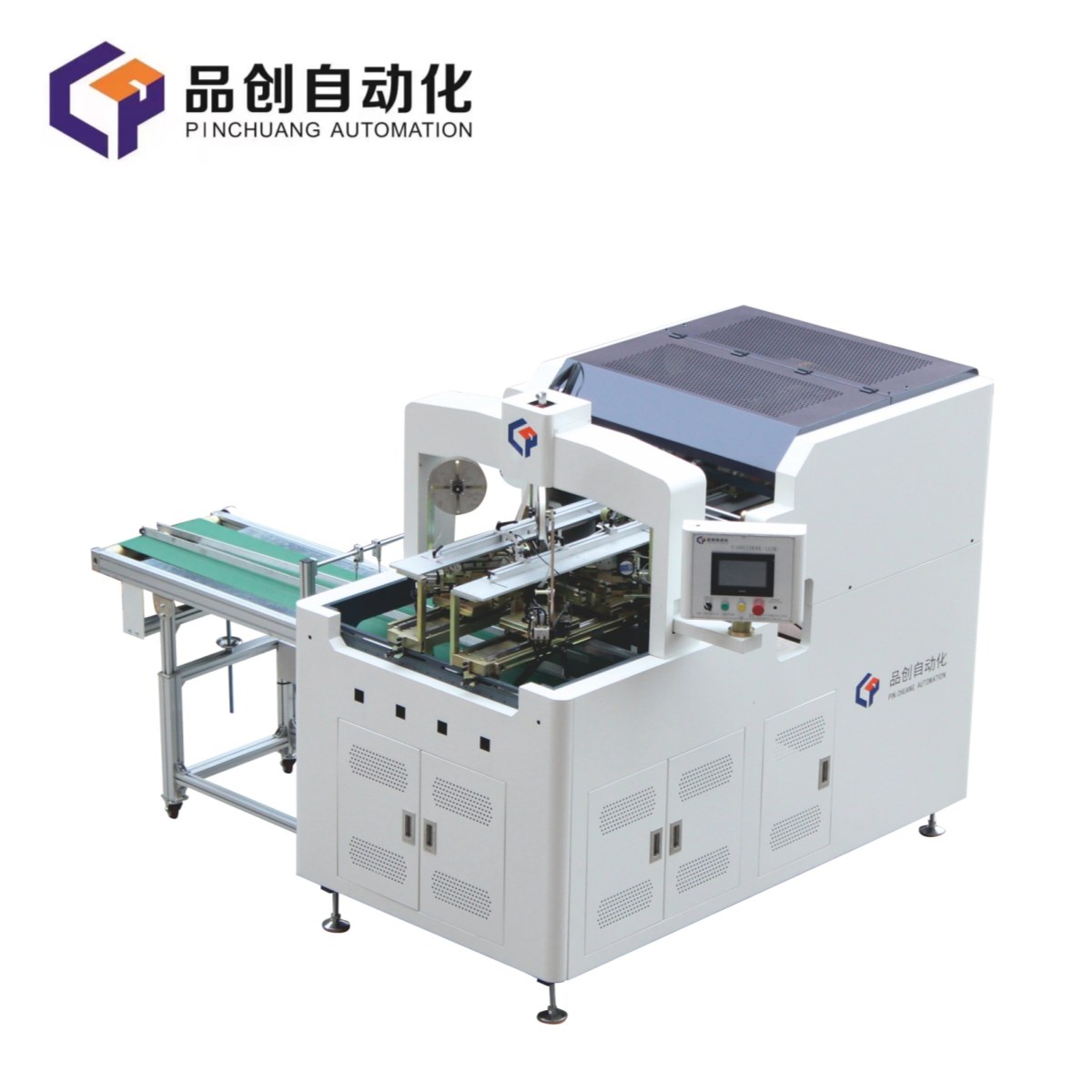
A China rigid box making machine order is now a normal part of packaging investment for buyers in Europe, the Middle East, Southeast Asia and the Americas. The reasons are not only about cost: the supply chain for greyboard handling, motion control and vision systems sits close together in the Pearl River Delta, which shortens both build times and the loop between a problem and a solution.
At Pinchuang we build rigid box equipment in Dongguan and export to more than 30 countries, so we see both sides of this decision. This guide sets out what a China order actually involves, what has changed in Chinese machine building over the past decade, where the real advantages sit, and the documentation and inspection points an overseas buyer should insist on.
What a China Rigid Box Making Machine Order Really Involves
Buyers who have not sourced capital equipment from China before often expect a single transaction: choose a model, pay, wait, receive. The reality has more stages, and knowing them makes the process far less stressful.
- Specification and box sample. You send box sizes, board thickness and wrap material. The manufacturer confirms the configuration and, where your sizes sit outside the standard range, quotes the tooling that changes.
- Build and test run. The machine is assembled and run on your sizes. Ask for the test to be filmed and for the sample boxes to be packed with the shipment.
- Inspection. Either your own inspector or a third-party agency checks the machine against the agreed specification before it is packed.
- Packing and shipping. Machines travel by sea in most cases, in fumigated cases with moisture protection, and the packing method matters as much as the machine itself on a long route.
- Installation and training. Either an engineer travels to site or your team is trained remotely, depending on the machine and the destination.
The stage overseas buyers most often underestimate is inspection, and the one they most often overpay for is the rush. A build that is brought forward by two weeks usually costs more in packing quality than it saves in shipping time.
What Changed in Chinese Machine Building Over the Past Decade
The reputation Chinese equipment carried fifteen years ago was based on machines that worked but were difficult to maintain. That description no longer fits the export-grade segment, and three changes explain why.
Motion control became standard, not premium
Servo drives and closed-loop positioning that were once reserved for high-end European lines are now the working basis of mainstream Chinese platforms. On a modern visual positioning machine, a robot reads printed marks and corrects position before gluing, holding ±0.1 mm — a figure that would have been exceptional on this class of equipment a decade ago.
Components and systems converged
Pneumatics, drives and vision systems from the same international suppliers now appear across Chinese machine ranges, which means a plant in Europe or Brazil can source a replacement part locally instead of waiting on a shipment. That single change removed the biggest practical objection overseas buyers used to raise.
Documentation caught up
Manuals, wiring schedules and tooling drawings are now expected as part of the package rather than requested as a favour, at least from manufacturers who export seriously. When you compare quotations, treat the documentation scope as a signal: it shows whether the supplier has ever supported a machine 8,000 km away.
Supply Chain and Lead-Time Advantages
The cluster effect is the least understood advantage of sourcing from China, and it is the hardest one to replicate elsewhere.
| Stage | Why the cluster helps |
|---|---|
| Frame and sheet metal | Fabricators and machine shops sit within a short drive, so a frame modification does not wait on a long logistics chain |
| Bolts, guide rails, pneumatic valves | Purchased locally at short notice, which keeps the build schedule from stalling on one item |
| Tooling and moulds | Cut and finished nearby, so a non-standard box size adds days rather than months |
| Packing and consolidation | Fumigated cases and container loading can be arranged at the factory rather than through several intermediaries |
For a buyer adding a second or third station later — a forming machine, then a double-station box making machine — this matters even more, because the second machine has to match the first one's speed and tooling family. A supplier inside the cluster can adjust the second build to fit the line you already have.
Quality, Documentation and Standards to Expect
Quality on this class of equipment is best judged against a written specification rather than a general impression, and three items should be fixed before the order is placed.
- Box size range in writing. Minimum and maximum in all three dimensions, plus the board thickness and wrap weight the figures apply to. Speed and precision mean little without these conditions attached.
- Positioning method and tolerance. Mechanical referencing and vision referencing are different systems with different accuracy. Confirm which one the quotation covers.
- Electrical configuration for your destination. Voltage, phase and frequency, and the control language, agreed before the panel is wired. Retrofitting a control cabinet for a different supply is a slow, expensive job.
Certification claims deserve particular care wherever you source. If a supplier names a standard, ask for the certificate with the machine model on it. Statements that are not backed by a document with a model number should not be repeated in your own tender documents.
Sourcing Practicalities: Inspection, Packing, Shipping, After-Sales
Four operational details separate a smooth import from a difficult one, and each is easier to settle in advance than to fix afterwards.
Inspection
Decide who inspects and against what. A third-party inspection is most useful when its checklist is the specification you agreed, not a generic one. Ask for the run to produce pieces at the quoted speed, not at a comfortable lower rate.
Packing
Ask how the machine is braced inside the case, how moisture is controlled on a long sea route, and which parts travel in a separate crate. Guide rails, forming moulds and control panels are the components most often damaged by inadequate bracing.
Shipping and documentation
Confirm what the supplier prepares and what your forwarder handles. Machine drawings, weights and container loading plans are needed early, because they affect how the line arrives at your door rather than at a port.
After-sales
Ask what happens on day thirty, not day one. Parts availability, remote diagnostics and the route to a technical answer are what you are really buying alongside the frame. A supplier that can name the wear parts on each station is a supplier that supports machines.
Pinchuang has built rigid box equipment in Dongguan since 2008, manufactures in a 10,000 m² facility with more than 100 employees, and ships to over 30 countries. We exhibit at All in Print China, Printing South China, China Print, Drupa, SINO FOLDING CARTON and WEPACK.
The four figures overseas buyers ask for first, all verifiable on request.


Both configurations come off the same rigid box making machine platform, and samples of how they are combined with other stations are collected on our applications page. Reading those layouts before you write a specification usually saves a round of revision.
Common Questions About Sourcing from China
Is lead time longer than sourcing locally?
Build time can be comparable, and the difference usually sits in shipping and customs. What matters is the split: ask for a stage-by-stage schedule so you can see where the time actually goes, and hold the packing stage rather than shortening it.
What about spare parts after the warranty period?
Settle it at order stage. Ask for an itemised wear-parts list with part numbers and confirm which items are standard commercial components available locally in your country. Common pneumatic and drive components can often be sourced regionally, while tooling and moulds normally come from the builder.
How do I verify a factory I have never visited?
Use a live video walkthrough of the assembly bay and parts store, ask for a machine mid-build rather than a finished one, and request a continuous test-run clip on your own sizes. Independent inspection before packing adds a second layer if the order value justifies it.
Can a machine be configured for our electrical supply?
Yes, and it should be agreed before the control panel is wired. Voltage, phase, frequency and the language of the operator interface all belong in the written specification, together with the box sizes the machine is set up to run.
Send Pinchuang your box sizes, board and wrap, and your destination port. We will reply with a configuration, a stage-by-stage schedule and the documentation package that travels with a China rigid box making machine order.
Request an export quotation See machines we export